Metal Braces (Traditional Braces)
How They Work and When Orthodontists Use Them
Metal braces, often referred to as traditional braces or traditional metal braces are one of the most established orthodontic treatment options. They continue to be widely used because of their reliability, precision, and ability to correct a wide range of alignment and bite issues.

- Clinically reviewed by Orthodontic Experts Orthodontic Team
- Apr 14, 2026
Key Takeaways
- Fixed orthodontic appliance using brackets and wires
- Offers high control for complex tooth and bite correction
- Commonly used for kids, teens, and adults
Table of Content
What are metal braces?
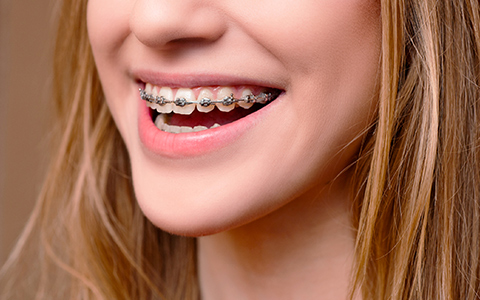
Metal braces are fixed orthodontic appliances made up of stainless-steel brackets bonded to the teeth and connected by an archwire. Because they remain in place throughout treatment, metal braces apply continuous, controlled force to move teeth into healthier positions.
They are called “traditional braces” because they have been used successfully for decades and continue to play an important role in modern orthodontic care.
What You Need to Be Careful About
Ceramic braces offer aesthetic benefits, but they also require awareness and care during treatment.
- Appearance depends on maintenance: Oral hygiene plays a key role in how braces look over time.
- Elastic ties may discolor: Some components can stain if not maintained properly.
- Material considerations: Ceramic brackets can be more delicate than metal in certain situations.
If appearance is a top priority, it is important to understand how daily habits can influence the overall look of your braces.
Learn More About This In Our Guide To Ceramic Braces Staining

Metal braces for kids, teens, and adults
Metal braces are used across all age groups depending on orthodontic needs and treatment timing
Braces Colors for Teens
Teens love using braces to express individuality. Popular colors for teens at Orthodontic Experts include electric blue, hot pink, burgundy, and neon green. Our orthodontists encourage teens with braces to consider lifestyle factors—such as diet—to maintain the vibrancy of lighter colors.

Kids
Children may receive interceptive orthodontics or partial braces early (ages 7-10) if needed, to guide jaw growth and address issues before they become severe. Full braces typically begin once most adult teeth have emerged (ages 11-13).

Adults
More common than you might think, about 1 in 5 orthodontic patients is an adult. Modern metal braces are lower-profile and more comfortable, fitting well into busy professional and personal lives—even if they are visible. Many adults opt for neutral or clear-colored elastics to keep the look subtle.

For patients using metal braces, small elastic bands are often used to hold the wire in place. These bands can come in different colors, which some patients، especially younger patients، may choose to personalize their braces during treatment.
Why People Consider Ceramic Braces
Most patients who explore ceramic braces are not starting with a question about how braces work, they are thinking about how braces will affect their appearance.
Ceramic braces are commonly considered by:
- Adults who want a more subtle option in professional settings.
- Teens who are conscious of how braces look in social environments.
- Patients who want a balance between visibility and treatment control.
They are often chosen not because they are fundamentally different in function, but because they feel more comfortable from a visual perspective.
How Ceramic Braces Look in Real Life?
Ceramic braces are less noticeable than metal braces, but they are not invisible. Understanding how they appear in different situations is important for setting realistic expectations.
- From a distance: Ceramic brackets tend to blend with natural tooth color, making them harder to notice in everyday conversations.
- Up close: The outline of brackets and the archwire may still be visible.
- Lighting conditions: Bright or direct lighting can make braces more noticeable.
- Components: Even when brackets are tooth-colored, wires and elastic ties can still be seen.
For most patients, ceramic braces significantly reduce visibility, but they do not completely disappear.
When Ceramic Braces Make Sense Clinically
Ceramic braces may be recommended when both effectiveness and appearance are important.
Orthodontists often consider them in cases where:

Fixed braces are needed for reliable tooth movement

Alignment issues are moderate to moderately complex

The patient prefers a less noticeable option but still needs controlled treatment
The final decision depends on an orthodontic evaluation, including tooth position, bite alignment, and treatment goals.
What Ceramic Braces Treatment Feels Like
The experience of wearing ceramic braces is similar to other fixed braces systems. Patients attend regular orthodontic visits where adjustments are made to guide tooth movement.
Some mild pressure or soreness may occur after adjustments, especially early in treatment. This is temporary and typically subsides as the teeth begin to move.
Maintaining good oral hygiene is essential, both for oral health and to preserve the appearance of the brackets.
Customization & Braces Colors
One of the fun aspects of metal braces is that you can personalize your look. At each adjustment appointment, you can choose the color of your elastic bands—whether you want a subtle look with clear or neutral tones or a bold statement with bright colors.
Visit our Braces Colors page for inspiration on popular combinations and to find your perfect style.
Schedule Now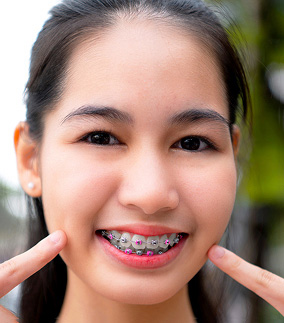
What to expect during treatment
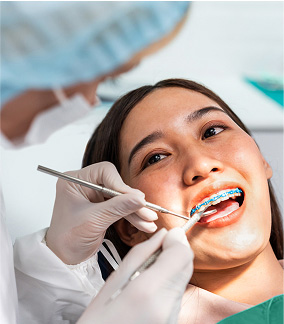
Patients with metal braces attend regular orthodontic visits for adjustments. Some pressure or soreness is common after these appointments, especially early in treatment, but this typically improves as the mouth adapts.
Maintaining good oral hygiene is essential during treatment, as brackets and wires can trap food and plaque if not cleaned properly.
Schedule Now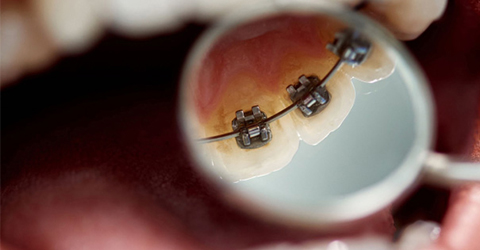
Process & Timeline for Treatment
Your journey to a beautifully aligned smile with metal braces at Orthodontic Experts is straightforward:
Step 01 Initial Consultation & Exam
We start with a no-cost consultation, where we examine your teeth, take X-rays or digital scans, and discuss your smile goals. We’ll explain your personalized treatment plan, review costs, insurance, and financing options, and answer all your questions.
Step 02 Braces Placement (Bonding Appointment)
In a 1-2 hour appointment, we clean and prep your teeth, bond the metal brackets, and secure the archwire with colored elastic bands. The process is painless and marks the beginning of your transformation.
Step 03 Regular Adjustments
Every 4 to 6 weeks, you’ll come in for adjustments where we tighten or change your archwire, replace elastic ties, and monitor your progress. These appointments are brief and essential for keeping your treatment on track.
Step 04 Completion & Braces Removal
Once your teeth have aligned properly, we remove the braces and provide you with custom retainers to maintain your new smile. Final records will be taken to document your transformation.
Step 05 Retention Phase
Wearing your retainers as directed will help ensure that your teeth remain in their new, correct positions.
Comparison Boundary
Metal braces are one of several orthodontic treatment options available today. To understand how they compare with other options, see our guide totypes of braces.
Frequently Asked Questions
We understand that you might have questions about metal braces. Here are answers to some common concerns:
Schedule a No-Cost ConsultationDoes getting metal braces hurt?
The process of attaching braces is smooth and painless. You might feel some light pressure, and mild soreness is common after adjustments—but it’s temporary.
How do I clean and maintain my braces?
Good oral hygiene is essential. Brush after every meal, floss using special tools for braces, and consider an interdental brush for hard-to-reach spots. We provide detailed instructions during your visits.
What foods should I avoid?
To protect your braces, avoid hard, sticky, or chewy foods like caramel, lollipops, and popcorn kernels. We’ll give you a full list of dietary do’s and don’ts at your consultation.
How often are adjustments needed?
Most patients come in every 4 to 6 weeks for adjustments, ensuring your treatment stays on track.
Educational content only. Treatment recommendations are made after a professional orthodontic evaluation.
Sources may include:
- American Association of Orthodontists
- Cleveland Clinic
Find orthodontic experts Near you
Orthodontic Experts will help you to find the treatment you are looking for. To ensure you have the greatest experience possible, our team of orthodontic professionals are committed to providing the best patient care and top-notch treatment plans. With multiple locations in Illinois, Wisconsin and Indiana we are just a call away.

Get the confidence you deserve and discover your new true smile with Orthodontic Experts.