
Types of Braces
Compare Options and Choose the Right Fit
There isn’t one “best” type of braces for everyone. The right option depends on your bite, the complexity of tooth movement needed, and what matters most to you appearance, convenience, or a fixed appliance that works around the clock.

- May 13, 2026
Key Takeaways
- Orthodontists typically use five main types of braces.
- The right option depends on diagnosis, not just appearance.
- Fixed braces offer more control for complex bite correction.
- Invisalign® clear aligners are effective for the right cases, with consistent wear.
Table of Content

What Are Braces?
Braces are orthodontic appliances used to straighten teeth and correct bite problems such as crowding, spacing, overbites, underbites, and crossbites. They work by applying gentle, controlled pressure over time to guide teeth into healthier positions.
How Do Braces Work?
All braces systems move teeth gradually through planned, gentle forces. Over time, that pressure encourages the bone around the tooth roots to remodel, allowing teeth to shift into alignment safely and predictably.
Fixed Braces vs Removable Aligners
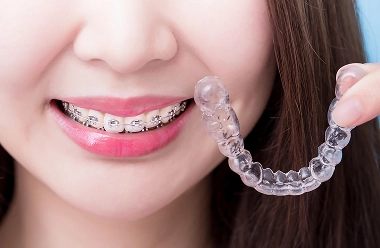
Fixed braces stay attached to the teeth throughout treatment and apply continuous force. Removable aligners, such as Invisalign®, can be taken out for eating and cleaning but rely on consistent daily wear. The choice depends on how much control is required for tooth and bite correction.
Different Types of Braces
Orthodontists typically use five main types of braces, each designed to address different alignment patterns, bite relationships, and treatment requirements. While these systems share the same goal moving teeth into healthier positions the way force is applied, how visible the appliance is, and how much control an orthodontist has can vary significantly.
Metal braces (traditional fixed braces)
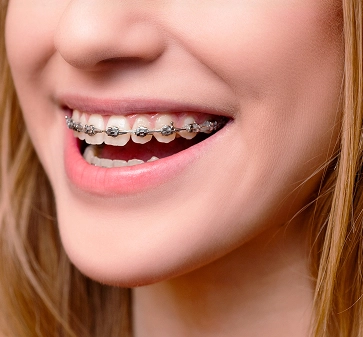
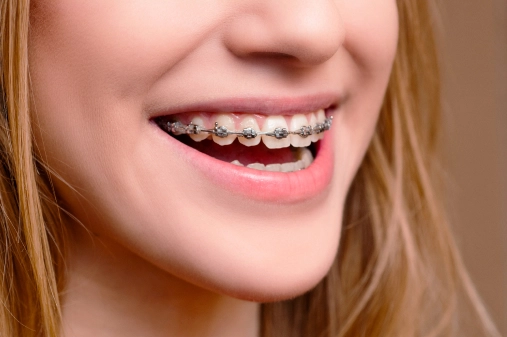
Metal braces use stainless-steel brackets bonded to the teeth and connected by an archwire. They are one of the most established orthodontic systems and have been used successfully for decades.
From a clinical standpoint, metal braces give orthodontists the highest level of control over tooth movement and bite correction. This makes them especially valuable for moderate to complex cases, including significant crowding, spacing, or bite discrepancies. Because adjustments are made directly to the wire and brackets, treatment can be carefully guided throughout each phase.
Although metal braces are more visible than other options, their reliability and versatility are the primary reasons they remain a standard choice in orthodontic care.
Learn more about metal braces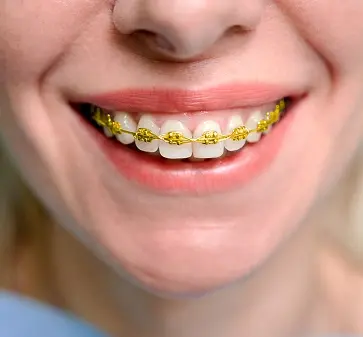
Gold Braces (Gold-Colored Fixed Braces)
Gold braces work similarly to traditional metal braces but use gold-colored brackets and wires for a warmer, more distinctive appearance.
They offer the same fixed-appliance control as metal braces, making them useful for many mild, moderate, and complex orthodontic cases. Patients often choose gold braces for aesthetic preference rather than because the treatment mechanics are different.
Because they are still fixed braces, treatment progress depends on diagnosis, regular adjustments, and how the teeth respond over time.
Learn more about gold braces
Ceramic braces (tooth-colored fixed braces)
Ceramic braces function in the same way as metal braces, but use tooth-colored or clear brackets designed to blend more naturally with the teeth.
Orthodontists often recommend ceramic braces when a patient requires the effectiveness of a fixed braces system but prefers a less noticeable appearance. Because the mechanics are similar to metal braces, ceramic braces can address many of the same alignment and bite concerns, provided the case is suitable.
As with all fixed braces, treatment progress depends on diagnosis, consistency of adjustments, and how the teeth respond over time.
Learn more about Ceramic braces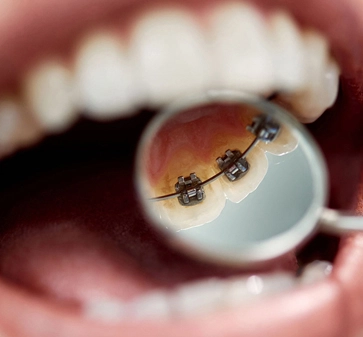
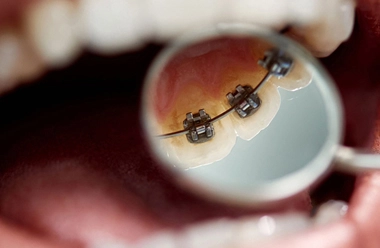
Lingual braces (braces placed behind the teeth)
Lingual braces are attached to the back (tongue-side) surfaces of the teeth rather than the front. This positioning keeps them hidden from view during everyday activities such as smiling or speaking.
These systems are custom-designed for each patient, as the shape and placement of the brackets must be tailored to the inner surfaces of the teeth. Lingual braces are often considered by adults who want a fixed braces system with maximum discretion.
Because of their placement, some patients experience an adjustment period related to speech or tongue comfort. Not all orthodontic cases are suitable for lingual braces, which is why an in-person evaluation is essential.
Learn more about Lingual braces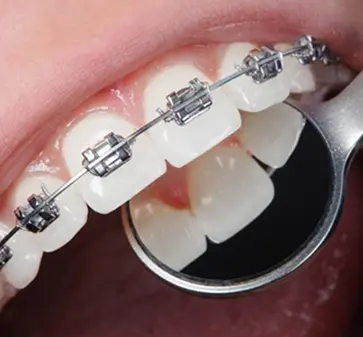
Self-ligating braces (brackets with built-in clips)
Self-ligating braces are a type of fixed braces that use a built-in clip or sliding mechanism to hold the archwire in place instead of elastic ties. The defining difference lies in the bracket design rather than the overall treatment goal.
Orthodontists may recommend self-ligating braces based on treatment mechanics, efficiency preferences, or individual case needs. Some patients notice differences in how adjustments feel or how appointments are structured, but the underlying principles of tooth movement remain the same as other fixed braces systems.
Treatment length is determined primarily by diagnosis and biological response, not by bracket type alone.
Learn more about Self-ligating braces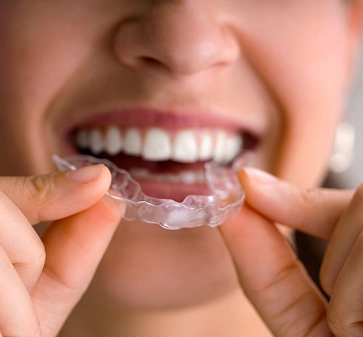
Invisalign® clear aligners (removable aligner system)
Invisalign® is a branded clear aligner system that uses a series of custom-made, removable trays to gradually move teeth. While Invisalign is often discussed alongside braces, it is a different orthodontic system that relies on aligners rather than brackets and wires.
Clear aligner treatment is commonly used for mild to moderate alignment concerns where tooth movement can be planned digitally and executed in stages. Because aligners are removable, consistent daily wear is essential for treatment to stay on track.
Although Invisalign can be highly effective for the right cases, it is not a universal replacement for braces. More complex bite corrections or tooth movements may require the added control of a fixed braces system.
Explore Invisalign treatmentComparison of braces types
| Type | Visibility | Complex Cases | Removable | Cost Range |
|---|---|---|---|---|
| Metal braces | High | Yes | No | $4,000 – $7,000 |
| Gold braces | High | Yes | No | $4,000 – $7,000 |
| Ceramic braces | Medium | Often | No | $4,000 – $7,000 |
| Lingual braces | Very Low | Sometimes | No | $4,000 – $7,000 |
| Self-ligating braces | High | Yes | No | $4,000 – $7,000 |
| Invisalign® | Very Low | Sometimes | Yes | $3,500 – $8,000 |
How to choose the right type of braces
Orthodontists consider several factors when recommending braces, including the complexity of your bite, aesthetic preferences, lifestyle considerations, and how much control is required to move teeth safely. An in‑person orthodontic evaluation ensures the treatment plan matches your individual needs.

Braces for kids, teens, and adults

Kids
Early orthodontic care can guide growth

Teens
Multiple effective braces options

Adults
Discreet treatments fit modern lifestyles
Cost differences between braces types
Costs vary based on treatment complexity, appliance type, and treatment length. Choosing braces should focus on effectiveness rather than price alone.
View braces cost guideEducational content only. Treatment recommendations are made after a professional orthodontic evaluation.
Sources may include:
Frequently Asked Questions
Which braces are least noticeable?
Lingual braces and Invisalign® clear aligners are among the least noticeable options. Ceramic braces may also appear less visible than traditional metal braces because their brackets blend with natural tooth color.
Are clear aligners as effective as braces?
Clear aligners can be very effective for mild to moderate alignment concerns. However, fixed braces are often recommended when more complex tooth movements or bite corrections are required.
Which type of braces works fastest?
Treatment time depends more on the individual diagnosis and treatment plan than the braces type itself. Fixed braces are often preferred for complex cases because they allow continuous, controlled force.
What type of braces is best for adults?
Adults commonly choose ceramic braces, lingual braces, or Invisalign® clear aligners based on aesthetic preferences and lifestyle. The most effective option depends on bite alignment and treatment goals.
Do braces hurt?
Most patients experience mild pressure or soreness when braces are first placed or adjusted. This discomfort is usually temporary and improves as the mouth adapts.
Are self-ligating braces better than traditional braces?
Self-ligating braces are not automatically better for every patient. They are one of several fixed braces systems, and suitability depends on orthodontic mechanics and individual case needs.
Can kids use clear aligners?
Some children and teens may be candidates for clear aligners, but success depends on growth patterns, treatment goals, and consistent wear. An orthodontic evaluation is required.
How does an orthodontist decide which braces to use?
Orthodontists evaluate tooth position, bite relationship, jaw alignment, and treatment objectives before recommending a specific braces system.
Book a No-Cost consultation
Find orthodontic experts Near you
Illinois (23 Locations)
Indiana (6 Locations)
Wisconsin (5 Locations)
Copyright © 2026. Orthodontic Experts Ltd. | Notice of Privacy Policy | Design & Developed by iSEO Ranker