
Hawley Retainers
Benefits, Fit and What to Expect
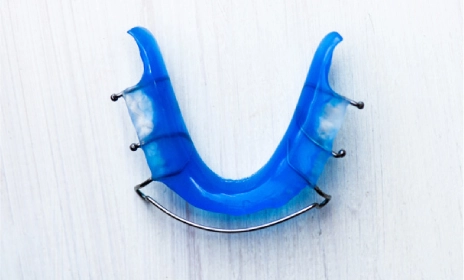
A Hawley retainer is a removable orthodontic appliance with a firm acrylic or plastic base and a metal wire that passes across the front teeth. It is durable, can sometimes be professionally adjusted and does not cover every biting surface with plastic.
The visible wire and initial speech adjustment are its main tradeoffs. For the right patient, a Hawley retainer can provide reliable long-term retention after braces or clear aligner treatment.
What Is a Hawley Retainer Made Of?
A traditional Hawley retainer has two main components:
- A custom acrylic or plastic base that rests against the roof of the mouth or behind the lower teeth
- A metal bow that crosses the front teeth and helps maintain their position
Additional clasps may secure the appliance around selected teeth. The orthodontist can modify the wire arrangement and acrylic coverage for the patient’s bite and retention needs.
The acrylic may be available in different colors or patterns. Customization changes the appearance, not the appliance’s clinical purpose.
Why Might an Orthodontist Recommend One?
A Hawley retainer offers a different balance of durability, removability and adjustability than a clear plastic appliance.
It may be considered when:
- A durable removable retainer is preferred
- Professional wire adjustment may be useful
- Full plastic coverage of the biting surfaces is undesirable
- A patient tends to wear through thin clear material
- A potentially repairable design has practical value
- The orthodontist needs a specific wire or clasp arrangement
The decision should reflect the bite, original tooth positions and treatment result, not simply a preference for one appearance.
What Does It Feel Like?
The appliance should feel secure without requiring force. The acrylic occupies some space inside the mouth, so it can seem bulky during the first few days.
You may initially notice:
- Increased saliva
- A temporary lisp or change in pronunciation
- Mild pressure against the teeth
- Awareness of the front wire
- A feeling of fullness against the palate
These effects often improve as the tongue and speech adapt. Reading aloud can help you become accustomed to speaking with the retainer.
Sharp pain, persistent sores or a wire that digs into the tissue are not problems to solve by bending the appliance yourself. Contact your orthodontist for an adjustment.
How Do You Insert and Remove It?
Position the retainer correctly and press it gently into place with your fingers. Do not bite down to force it over the teeth.
Release the clasps evenly from both sides when removing it. Pulling repeatedly on the front wire can bend it and change how the appliance fits.
Your orthodontic team should show you the correct grip points for your particular design.
If the retainer suddenly becomes difficult to insert or remove, stop forcing it. The wire may have changed shape, the acrylic may be damaged or a tooth may have moved.
Can a Hawley Retainer Be Adjusted?
Yes, in selected situations, but only by an orthodontic professional.
The wire may sometimes be adjusted to improve retention, relieve an irritating area or address a limited clinical need. This adjustability is one of the Hawley design’s practical advantages.
A standard Hawley retainer is passive and intended to hold teeth. If its wire is deliberately modified to apply active force, the appliance is functioning as an active orthodontic device and should be monitored accordingly.
Do not bend the wire at home. A small uncontrolled change can place pressure on the wrong tooth, alter the fit or affect the bite.
Advantages of Hawley Retainers
Durability
The acrylic base and metal wire can tolerate regular use well when handled correctly. A Hawley retainer may suit someone who repeatedly cracks or wears through thin clear plastic.
It is still vulnerable to pets, heat, bending and improper storage.
Professional adjustability
An orthodontist can sometimes modify the wire to refine the fit or address a specific retention concern. A clear retainer offers less scope for adjustment after it has been formed.
Potential repairability
Some wire, clasp or acrylic damage may be repairable. The orthodontist or laboratory must determine whether a repair will restore an accurate and safe appliance.
Open biting surfaces
The design generally allows the upper and lower teeth to meet without a plastic layer covering every biting surface. This can be useful in selected bite relationships.
Limitations to Consider
The wire is visible
The front bow can be seen when you smile or speak. Patients who prioritize a less noticeable removable appliance may prefer a clear retainer.
Speech may take longer to adjust
The acrylic base occupies space used by the tongue. Most speech changes are temporary, but they can be more noticeable initially than with a close-fitting clear shell.
It may feel bulkier
Some patients prefer the open biting surfaces; others favor the compact feel of transparent plastic.
It still depends on consistent wear
Durability does not compensate for leaving a removable retainer in its case. It must be worn according to the schedule prescribed for your teeth.
Hawley or Clear Retainer?
| Hawley retainer | Clear retainer |
|---|---|
| Front wire is visible | Less noticeable |
| Acrylic rests against the palate or inside lower teeth | Plastic fits closely over the teeth |
| May be professionally adjusted | Limited adjustment after forming |
| Some damage may be repairable | Significant cracks or distortion usually require replacement |
| Does not generally cover all biting surfaces | Covers the biting surfaces |
| May have a more noticeable speech-adjustment period | Often feels more compact |
Neither is universally better. Appearance, bite, grinding, durability and willingness to wear the appliance all matter.
A fixed retainer may be considered when continuous support of selected teeth is needed or removable-retainer compliance is a concern.
Eating, Storage and Cleaning
Remove a Hawley retainer before meals unless instructed otherwise. Place it in its protective case rather than a napkin, pocket or bag.
Keep it away from hot water and other heat sources. Heat can affect the acrylic, while rough handling can bend the wire.
Clean it daily with a material-safe method, paying attention to the areas where wires and clasps meet the acrylic. Do not scrape deposits or use an abrasive cleaner.
For complete instructions, read How to Clean a Retainer.
How Long Can It Last?
A Hawley retainer may remain usable for five to ten years or longer, but there is no guaranteed expiration date.
Its actual lifespan depends on fit, handling, cleaning, grinding, dental work and changes in the mouth. A durable retainer still needs attention if the wire bends, the acrylic cracks or the appliance becomes loose or inaccurate.
See How Long Do Retainers Last? for replacement warning signs.
Is a Hawley Retainer Right for You?
A Hawley retainer may suit someone who values durability and professional adjustability and accepts a visible front wire. A clear design may be preferable when discretion is the priority, while permanent retention may help when remembering a removable appliance is difficult.
Orthodontic Experts can evaluate your bite, treatment result and daily needs and explain whether a Hawley, clear, permanent or combined retention plan is appropriate.
Frequently Asked Questions
Why does a Hawley retainer have a wire across the front?
The front wire works with the acrylic base and clasps to maintain the intended tooth positions and keep the appliance secure.
Will the wire damage my teeth?
A correctly fitted passive wire should not damage healthy teeth. Contact your orthodontist if it bends, creates strong localized pressure or causes persistent irritation.
Can a Hawley retainer close a gap?
A conventional Hawley retainer is designed to hold teeth. An orthodontist may modify an appliance for limited movement in selected cases, but that requires professional planning.
Can I switch from a Hawley retainer to a clear one?
Possibly. The orthodontist should first check your current tooth positions, bite and retention needs so the new appliance preserves the appropriate result.
What should I do if the wire breaks?
Stop wearing it if the broken section is sharp, unstable or prevents full seating. Store the appliance and contact your orthodontist. Do not glue or bend it at home.
Table of Content
More Retainers Information


Book a No-Cost consultation
Book your consultation or choose the location that works best for you.
Find Retainers Treatment Near You!
Treatment should fit into your routine, not disrupt it. Orthodontic Experts offers multiple locations across:
Copyright © 2026. Orthodontic Experts Ltd. | Notice of Privacy Policy | Design & Developed by iSEO Ranker